Philippines Surpasses Brazil in Global Online Gaming Search Demand
 AI-GENERATED
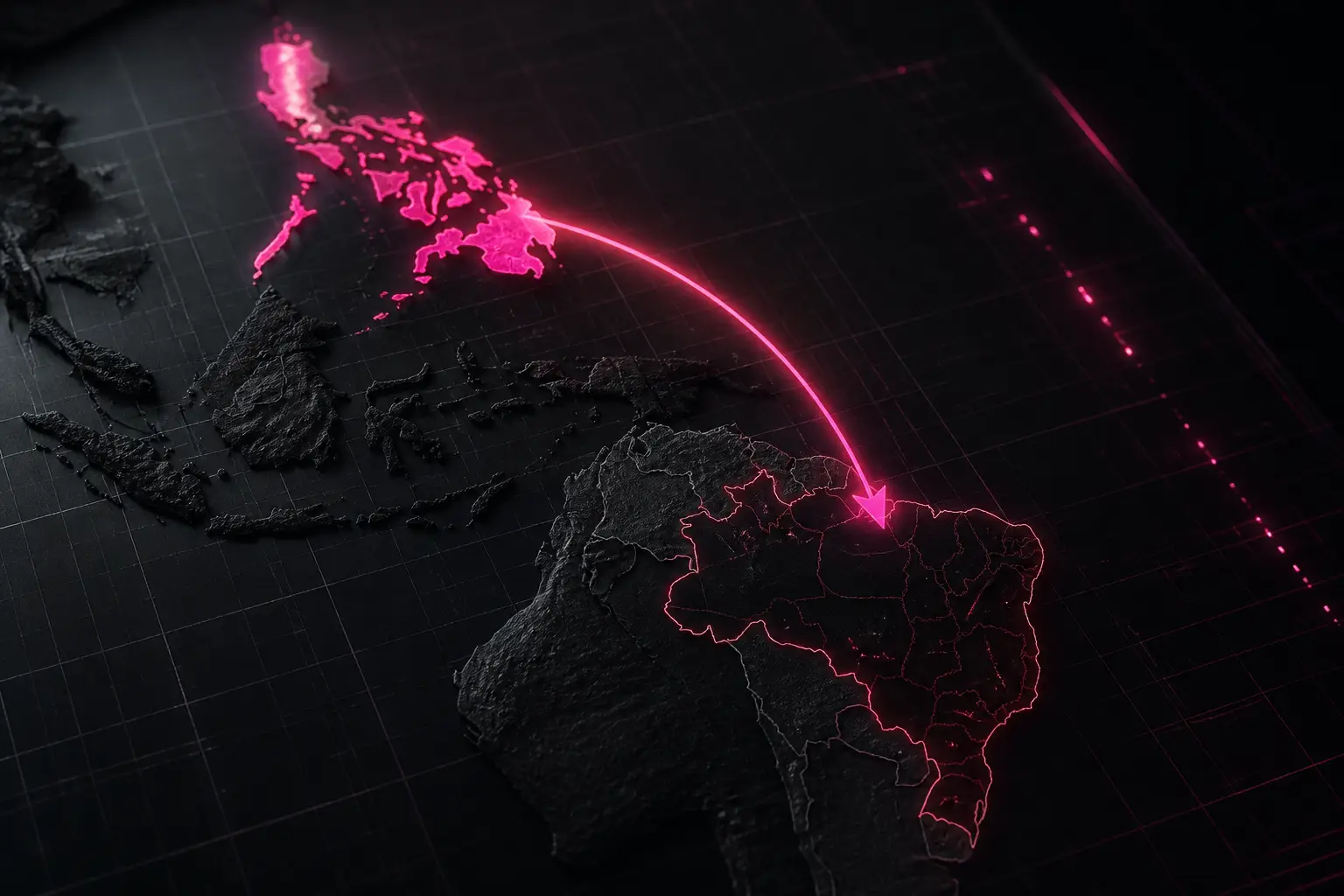
The Philippines has emerged as the global leader in online gaming search interest, with an 87 percent year-on-year increase in the Blask Index for September 2026.
The global landscape of online gaming demand experienced a significant shift in September 2026. According to the latest data from gaming analytics platform Blask, the Philippines has climbed to the top of the rankings for search interest related to online gaming brands. This move displaces Brazil, which had held the leading position throughout the first eight months of 2026. The shift highlights how quickly consumer behavior responds to both market opportunities and regulatory changes across different jurisdictions.
However, it is vital to distinguish between curiosity and commerce. While the Philippine market is currently seeing a massive spike in digital traffic, this does not automatically translate into the world's highest gambling revenue. Search demand acts as a barometer for brand awareness and consumer intent, but realized revenue depends on a variety of economic factors, including disposable income and the maturity of the local licensing framework. For now, the Philippines represents the most vibrant growth story in terms of brand discovery.
Numbers and facts
The Philippine Blask Index rose by 87% year-on-year in September 2026, also showing an 8% increase from August. In stark contrast, Brazil’s index moved in the opposite direction, declining by 9% month-on-month and dropping 31% compared to the same period in the previous year. These figures illustrate a clear divergence in market momentum between the two regions.
Market concentration is another key takeaway from the September report. In the Philippines, search interest is heavily clustered around a few dominant players. Specifically, three operators—PlayTime, Casino Plus, and BingoPlus—accounted for more than half of all online gaming search demand during the month. In terms of revenue potential, Brazil still holds the upper hand. Blask’s Competitive Earning Baseline (CEB) for Brazil remained 53% higher than that of the Philippines. Furthermore, the share of projected revenue from licensed operators is significantly higher in Brazil (97%) compared to the Philippines (62%).
Background
The sudden cooling of the Brazilian market can be traced back to a specific government action. On September 25, 2026, a provisional measure was issued that prohibited online betting and gaming operations, even affecting platforms that were previously authorized to operate. This measure blocked platforms from accepting new deposits and set a deadline of October 6 for licensed sites to cease their operations.
"The Philippine result reflects leadership in search demand. It does not mean the country generated more online gaming revenue than Brazil during the month, nor does the index itself measure how much consumers spent." - Blask analytics team
Because the full shutdown in Brazil was scheduled for October, the September search data only captures the initial impact of this regulatory shock. The Philippines, meanwhile, continues to operate under a framework that currently encourages high levels of consumer engagement, though a larger portion of their projected revenue still stems from the gray market compared to Brazil’s highly regulated projections.
Why it matters for German players
For players in Germany, these global shifts serve as a reminder of the volatility in unregulated or rapidly changing markets. The German market, governed by the State Treaty on Gambling 2021 (GlüStV 2021), offers a much more stable environment. While search trends in the Philippines might show massive growth, German players benefit from the security of the GGL whitelist. This ensures that any platform they use adheres to strict player protection standards, such as the 1,000 Euro monthly deposit limit monitored via the LUGAS system.
The high percentage of search interest for non-licensed brands in the Philippines (where 38% of projected revenue is non-licensed) highlights the risks of offshore gambling. In Germany, the GGL works actively to block such illegal offers, ensuring that consumers are not exposed to platforms without proper oversight or responsible gaming tools like the OASIS cross-provider ban system.
What it means for GGL-licensed casinos
For GGL-licensed operators, the data from the Philippines underscores the importance of brand dominance. When three brands capture over 50% of a nation's search interest, it proves that consistent marketing and brand trust are the primary drivers of user acquisition. German operators must navigate much stricter advertising rules under the GlüStV 2021, making it even more important to build a reputation for safety and reliability.
As Brazil’s market faces a temporary blackout, the importance of a sustainable regulatory environment becomes clear. German casinos that focus on long-term compliance rather than short-term gains are better positioned to survive the kind of sudden legal shifts seen in South America. The stability of the German license, despite its restrictions like the 1 Euro stake limit, provides a safer foundation for both operators and players alike.
Frequently asked questions
Which country has the highest search interest in online gaming?
As of September 2026, the Philippines has overtaken Brazil and India to lead the world in search demand for gaming brands. The Blask Index for the country saw a year-on-year increase of 87%.
Why did search interest in Brazil decline?
The 31% year-on-year decline is attributed to a government measure on September 25, 2026, which banned online gaming operations and new deposits. This led to a significant drop in consumer activity as the market faced a scheduled shutdown.
Does higher search volume mean more revenue?
Not necessarily. The Blask Index measures consumer interest in brands, not actual spending. Brazil’s potential gaming revenue (CEB) remained 53% higher than that of the Philippines in September.
Which operators are leading in the Philippines?
The market is highly concentrated, with three brands—PlayTime, Casino Plus, and BingoPlus—accounting for over 50% of the total search demand in September 2026.
What should German players keep in mind regarding these trends?
German players should focus on the stability of the local market under the GGL. While other markets fluctuate, playing at GGL-licensed sites ensures protection under the GlüStV 2021, including deposit limits and the OASIS ban system.
Share
About the author

Lisa Lustich
Editor-in-chief & casino tester
Lisa Lustich has been testing German-language online casinos since 1997 and runs the Lustich.de newsroom. More than 400 published reviews, certified player-protection advisor (BZgA training, 2019).
All articles by Lisa Lustich →Sources & further reading
Whitelist of permitted online operators
Editorial guidelines Lustich.de
BZgA problem-gambling helpline: 0800 1 372 700
Gambling can be addictive. Please play responsibly. Help and counselling at 0800 1 372 700 (BZgA, free & anonymous).
Related topics
Further Reading
 AI-GENERATED
Pennsylvania Online Poker: FanDuel Drives Market Stability in September 2026
Pennsylvania's online poker market reached $2.3 million in revenue in September 2026, bolstered by a strong performance from FanDuel Poker.
 AI-GENERATED
Kendoo expands slot distribution through partnership with Broadway Platform
Kendoo's feature-led slot portfolio, including Hold and Win mechanics, is set to reach new markets via the award-winning Broadway Platform.
 AI-GENERATED
Flutter Axes 1,400 Jobs: Tax Hikes Disrupt UK Gambling Landscape
Gaming giant Flutter is cutting up to 1,400 jobs across the UK and Ireland as a direct response to massive gambling tax increases threatening its economic model.