Africa's iGaming Evolution: Balancing Regulation and Digital Growth
 AI-GENERATED
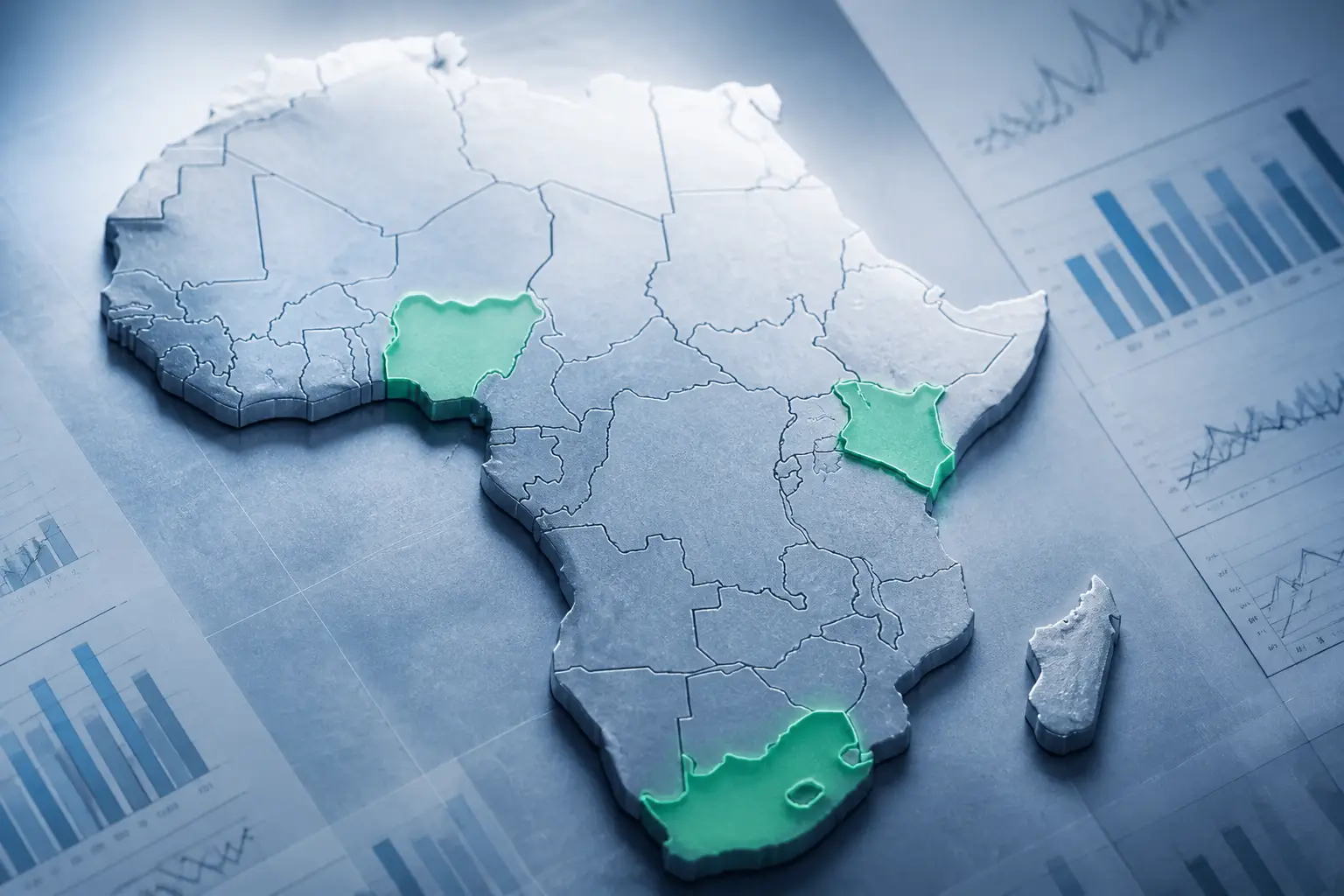
Africa's iGaming market is booming, with total GGR reaching an estimated €21.4 billion in 2025, although only 23% currently flows through regulated operators.
The African continent is rapidly emerging as a central pillar of the global online gambling industry. While international markets often face stagnation, the analysis of Africa's iGaming sector reveals a dynamic landscape shaped by both technological innovation and profound regulatory shifts. One of the most significant mistakes international operators make is treating Africa as a single, homogeneous market. Each of the 54 nations possesses its own unique set of rules, tax systems, and payment habits, making market entry a complex undertaking for global entities.
A striking observation is the immense potential that currently exists outside of legal frameworks. Estimates from Gaming Compliance International suggest that the African online gambling market generated a Gross Gaming Revenue (GGR) of approximately €21.4 billion in 2025. However, a critical issue remains the channeling rate: only about 23 percent of this revenue was generated through regulated operators. This highlights a massive opportunity for licensed brands to capture market share from the informal sector, provided the regulatory conditions are favorable.
Numbers and facts
Statistical milestones underscore the scale of growth. By 2032, the African gambling market is projected to be worth $11.3 billion, nearly double the $6.1 billion generated in 2023. A primary driver of this trend is the continent's demographic structure; roughly 70 percent of the population in sub-Saharan Africa is under the age of 30. In markets like Ghana, a shift in gaming preferences is evident. Although crash games represented only 1.4 percent of the game catalog in March 2026, they accounted for roughly two-thirds of player search demand. The game Aviator alone represented over 73 percent of player interest in the country's casino segment.
"Ghana is the most stable market out of the three (alongside Cameroon and Uganda) with less currency devaluation. Uganda is interesting because mobile adoption is really high so the deposit experience is frictionless." - Giorgi Shaverdashvili, Regional Head of Commercial for Africa at SmartSoft
Ethiopia provides a stark example of volatility and the importance of state control. In December 2025, the government revoked all betting licenses after a state audit uncovered €161 million in unpaid state revenue between July 2023 and December 2025. Despite the shutdown, illegal market transaction volume reached approximately €117 million in September 2026, four times the baseline recorded in 2023. This demonstrates that prohibitions do not eliminate demand but rather push it toward unregulated channels.
Background
Technological progress in Africa is inextricably linked to mobile payment systems. In Kenya, for example, M-Pesa is so deeply embedded in daily life that transaction values reached a staggering €276 billion in the financial year ending March 2026. The transition from land-based betting shops to smartphones is often a hybrid process. Customers utilize physical agents to deposit cash into their digital wallets, which they then use for online play. This infrastructure remains a key factor for success, even as the trend moves decisively toward mobile applications.
Regulators across Africa are tightening their grip. Kenya is implementing a new Gambling Control Act, while Nigeria continues to navigate a complex regulatory environment shaped by both federal and state-level oversight. In South Africa, the continent's most industrialized market, established brands like Hollywoodbets, Betway, and Lottostar already dominate. The challenge for the future lies in player retention. As acquisition costs rise, personalized offers and enhanced customer support are becoming central to operator strategies.
Why it matters for German players
For players in Germany, these developments in Africa serve as an interesting case study on the effectiveness of regulation. The German Interstate Treaty on Gambling 2021 (GlüStV 2021) focuses on strict player protection measures, such as the €1,000 monthly deposit limit and the €1 per spin limit for online slots. While the African market often prioritizes technical accessibility and mobile payments, the German focus remains on supervision through the LUGAS system and the OASIS exclusion database.
German users should be aware that operators active in emerging markets like Nigeria or Ghana without local licenses are often classified as "offshore" providers in Europe as well. Such platforms do not offer the protections provided by the Joint Gambling Authority of the German States (GGL). To ensure a safe experience, players in Germany must stick to the official GGL whitelist, which guarantees compliance with strict legal limits and the secure payout of winnings.
What it means for GGL-licensed casinos
For GGL-licensed operators, the African market highlights the importance of localization and technical stability. While German providers operate within a tight regulatory framework, they benefit from high legal certainty compared to markets like Ethiopia, where licenses can be revoked abruptly. Trends from Africa, particularly the rise of fast-paced crash games, may eventually influence the German market, provided these games can be aligned with local youth protection and addiction prevention rules. The focus on data analytics for retention, as seen in Africa, is also essential for GGL casinos to remain competitive within legal boundaries.
Frequently asked questions
How large is the iGaming market in Africa?
In 2025, the sector generated a Gross Gaming Revenue of approximately €21.4 billion. Projections suggest that the regulated market will grow to over $11.3 billion by 2032, driven by a young population and improved internet access.
What role do mobile payments play in Africa?
Mobile payment systems like M-Pesa are essential for market success as they often serve as the only link between cash and digital betting. In Kenya alone, M-Pesa processed transactions worth €276 billion in the financial year ending March 2026.
Why were licenses revoked in Ethiopia?
Ethiopian authorities halted the sector in December 2025 after an audit found approximately €161 million in unpaid state revenue. This led to a massive surge in the black market, which reached a volume of €117 million by September 2026.
Which games are particularly popular in Africa?
Football sports betting remains the backbone, but crash games like Aviator are gaining massive traction. In Ghana in 2026, roughly two-thirds of casino-related search queries were for these fast mobile games, despite them making up only a small part of the portfolio.
Are African operators safe for players in Germany?
No, operators without a GGL license are considered illegal in Germany and do not offer the protections of the Interstate Treaty on Gambling 2021. German players should exclusively use platforms on the official whitelist to benefit from limits like the €1,000 deposit cap.
Share
About the author

Lisa Lustich
Editor-in-chief & casino tester
Lisa Lustich has been testing German-language online casinos since 1997 and runs the Lustich.de newsroom. More than 400 published reviews, certified player-protection advisor (BZgA training, 2019).
All articles by Lisa Lustich →Sources & further reading
Whitelist of permitted online operators
Editorial guidelines Lustich.de
BZgA problem-gambling helpline: 0800 1 372 700
Gambling can be addictive. Please play responsibly. Help and counselling at 0800 1 372 700 (BZgA, free & anonymous).
Related topics
Further Reading
 AI-GENERATED
Betfred reaches nearly £1 billion turnover in financial year 2026
Betfred reported an annual turnover of £995.6 million, with online revenue growing to £451.6 million thanks to massive tech investments.
 AI-GENERATED
Record Growth: Singapore Pools Reaches S$13.48 Billion Turnover in FY26
Singapore's state-owned gambling operator Singapore Pools reported a 6 per cent turnover increase to S$13.48 billion for the 2026 financial year.
 AI-GENERATED
PointsBet projects revenue drop due to stricter VIP compliance
PointsBet expects a 16 percent year-on-year revenue decline to approximately A$113m for H1 2027, driven by Australian regulatory changes.