
US Sweepstakes Bans: How Single-Currency Models Bypass Regulations
 AI-GENERATED
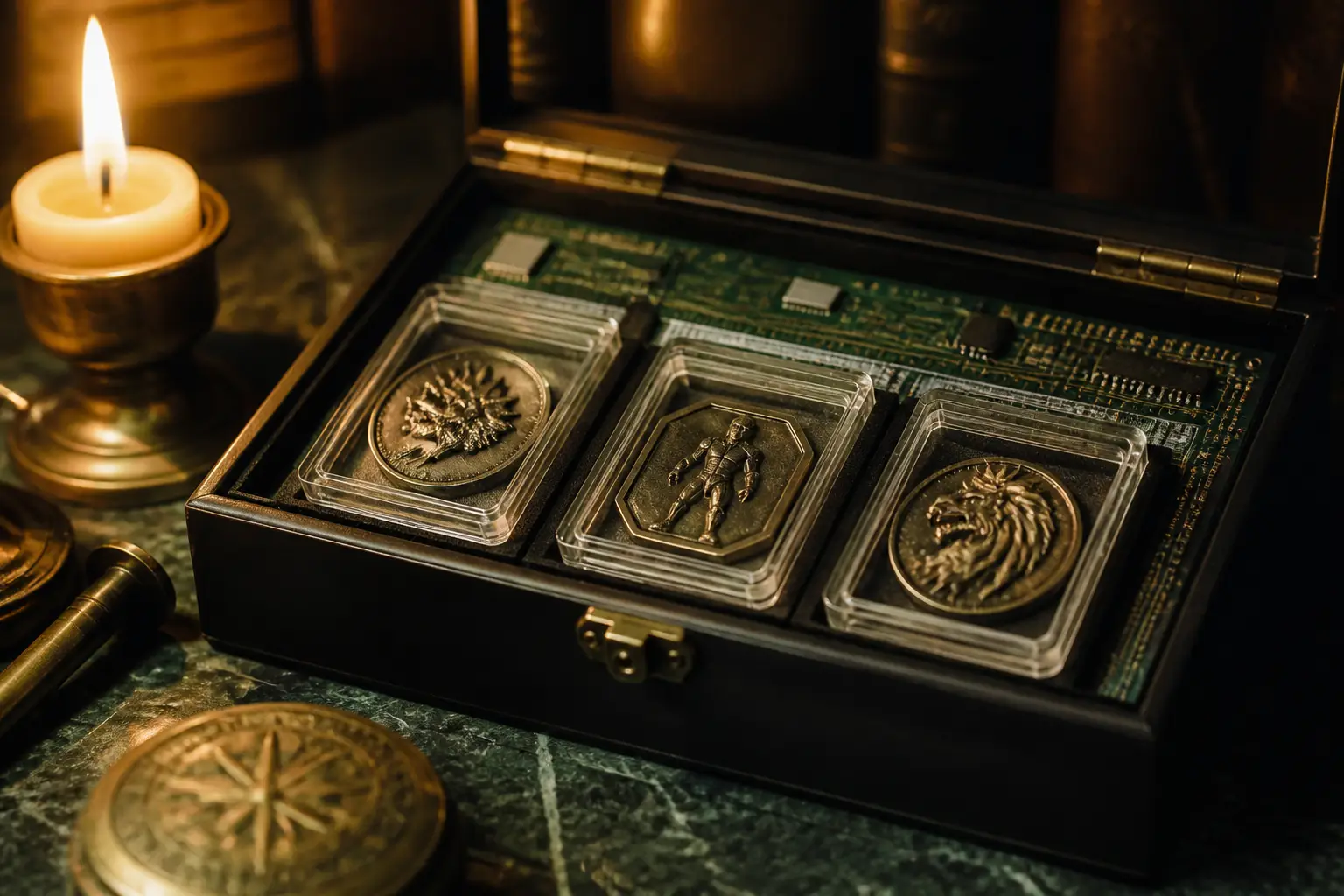
Following new bans in California and New York, operators are pivoting to single-currency models selling digital collectibles instead of virtual coins.
In the world of American online gambling, a high-stakes game of cat and mouse is currently unfolding between regulators and operators. While US states like California and New York are attempting to drive sweepstakes casinos out of the market with new legislation, resourceful operators have already occupied a new niche: single-currency casinos. These platforms abandon the traditional dual-currency system and instead sell digital collectibles to circumvent regulatory hurdles. Since the new laws often explicitly target the combination of two currencies, these new offerings fall through the cracks of the statutes.
The previous sweepstakes casino model was based on Gold Coins for pure entertainment and Sweeps Coins, which could be redeemed for cash. With California's AB 831 taking effect on January 1, 2026, this system was significantly restricted. The industry's response was swift. Providers like Vision NL Limited, the company behind McLuck, launched Card Crush. Here, users do not buy coins but mystery boxes containing digital battle cards. The coins for the slots are merely a complimentary addition, shifting the legal classification from a gambling offer to online retail.
Numbers and facts
The economic importance of these markets is massive. A study by Eilers & Krejcik Gaming estimated player purchases in California alone for 2025 at $2.42 billion, representing about 17 percent of the total US market. Net revenue was calculated at $790 million. In New York, purchases in 2024 amounted to $762 million with a net revenue of $252 million. Together, these two states account for roughly a quarter of the entire market, which was valued at $4.0 billion to $4.6 billion in net revenue for 2025.
The new single-currency sites are growing rapidly. Card Crush recorded approximately 5.4 million visits in the three months leading up to late September 2026, equivalent to about 1.8 million monthly users. This ranks the site 12th among the most visited casino websites in the US, ahead of its sister brand McLuck. The pricing structure is kept simple: coins cost about $2 in standard packages, while welcome offers feature prices of $0.40 to $0.50 per coin. Payouts are possible from 75 Mystery Coins via bank transfer or from 10 coins as a gift card.
Background
The legal core of the new strategy lies in the definition of the bans. California Penal Code 337o and New York's Racing, Pari-Mutuel Wagering and Breeding Law Section 912 both define prohibited products as online sweepstakes games using a dual-currency system. By removing the play-money layer, operators claim they no longer fall under these definitions based on a plain reading of the text. Furthermore, the games are often disguised as card battlers or tournaments, which are not explicitly listed in the prohibited categories for slots or roulette.
Nevertheless, pressure from the judiciary is mounting. New York Attorney General Letitia James announced an $8 million settlement with VGW, the operator of Chumba Casino, on September 9, 2026. The company was required to remain Gold Coin-only in New York. Florida Attorney General James Uthmeier also filed suit against Stake.us and VGW on August 19, 2026, targeting payment processors like Worldpay and Trustly for the first time.
"A ban written around two currencies leaves room for a product with one." - Industry Insider (paraphrased from operator strategy descriptions)
Why it matters for German players
For German players, the situation in the US serves as an important reminder of the significance of clear regulation. While gray-market models flourish in the US, the German market is strictly regulated by the State Treaty on Gambling 2021 (GlüStV 2021). In Germany, there are no sweepstakes casinos with real monetary value that are allowed to operate legally. All providers must be on the whitelist of the Joint Gambling Authority of the States (GGL). For players, this means security but also limitations: a cross-provider deposit limit of 1,000 euros per month applies, monitored via the LUGAS system. Additionally, stakes on virtual slot machines are limited to 1 euro per spin. US models like Card Crush or ZumbaCards do not have a license in Germany and are therefore illegal. Anyone playing in Germany must ensure the casino holds a German license, as only then do player protection measures like the OASIS lock file apply.
What it means for GGL-licensed casinos
Developments in the US show how creatively the unregulated market reacts to bans. For GGL-licensed casinos in Germany, this means they must emphasize their competitive advantage through legal certainty and player protection. While US players pivot to platforms lacking clear consumer protection rules, the German market offers a reliable environment. However, German providers must remain vigilant, as such circumvention models could theoretically attempt to infiltrate the European market. The GGL has already proven it takes strict action against illegal offers through IP blocking and cooperation with payment service providers. A system like the single-currency models would be classified as illegal gambling in Germany immediately, as the deciding factor here is not the number of currencies, but the presence of stake, chance, and the possibility of winning.
Frequently asked questions
What is a single-currency casino?
Unlike traditional sweepstakes casinos, these sites use only one currency. This currency is not bought directly but issued as a free bonus alongside a digital product like battle cards or posters.
Which US states have banned sweepstakes casinos?
Eleven states have already passed specific laws, including California, New York, Michigan, and Oklahoma. Other states like Florida are using existing gambling laws to file lawsuits against operators.
How do payouts work in these models?
Players can usually redeem their won coins at a 1:1 ratio for US dollars. At Card Crush, for example, a payout is possible from 75 coins via bank transfer or from 10 coins as a gift card after a 1x playthrough.
Are single-currency casinos legal in Germany?
No, these models do not hold a license from the Joint Gambling Authority of the States (GGL). In Germany, any game involving a stake and the chance to win that is not on the official whitelist is illegal.
Share
About the author

Lisa Lustich
Editor-in-chief & casino tester
Lisa Lustich has been testing German-language online casinos since 1997 and runs the Lustich.de newsroom. More than 400 published reviews, certified player-protection advisor (BZgA training, 2019).
All articles by Lisa Lustich →Sources & further reading
Whitelist of permitted online operators
Editorial guidelines Lustich.de
BZgA problem-gambling helpline: 0800 1 372 700
Gambling can be addictive. Please play responsibly. Help and counselling at 0800 1 372 700 (BZgA, free & anonymous).
Related topics
Further Reading
 AI-GENERATED
Elon Musk's X Sues Duel.com Founder Over Bribery and Account Hacking Allegations
X Corp. has filed a lawsuit against Ossi Ketola, alleging he offered bribes up to $300,000 to employees to manipulate accounts like @duel and @monarch.
 AI-GENERATED
Fabio Tiberia Appointed Vice President LATAM at BetConstruct
Technology giant BetConstruct has named Fabio Tiberia as its new VP for Latin America. Tiberia brings 16 years of experience in the Brazilian iGaming market.
 AI-GENERATED
Police Operation at Casino Zurich: Heavily Armed Officers Secure Gambling Hall
Zurich city police have cordoned off the local casino with submachine guns following an undisclosed incident. While guests are still allowed entry under strict controls, the background remains mysterious.