
Billion-Dollar Resort Stalled: Jackson City Council Delays Pearl River Casino Vote
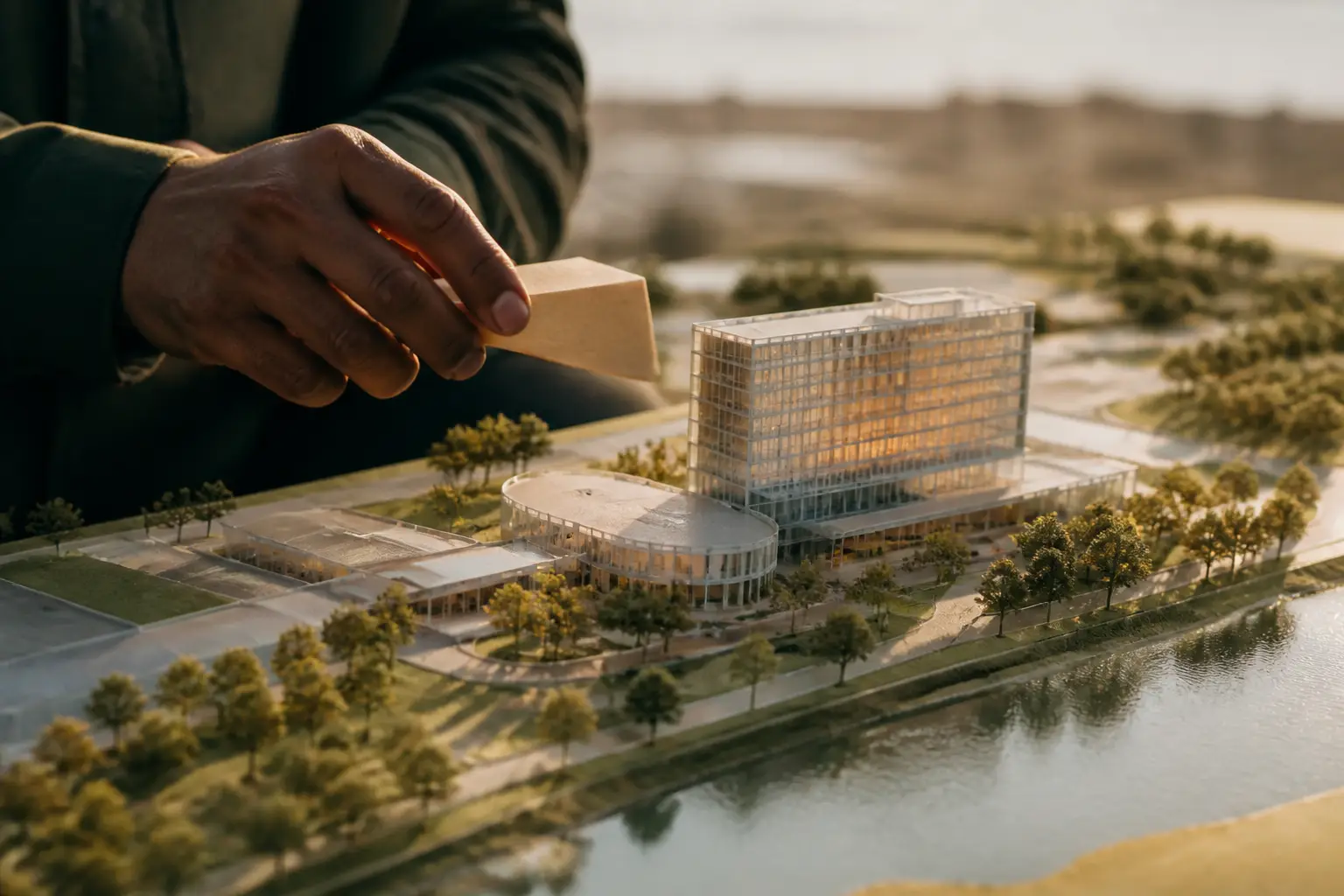 AI-GENERATED
A proposed billion-dollar resort in Jackson could create 2,600 jobs, but city leaders are hesitant to sell 93 acres of land for just $111,000.
The city of Jackson is at a crossroads regarding a massive economic development proposal that could redefine its waterfront. A local investment group, LeFleur Development LLC, is pushing for a nearly billion-dollar resort and casino development on the banks of the Pearl River. Despite the potential for significant revenue, city leaders opted to table the request on October 6, 2026. The decision reflects deep-seated concerns over the terms of the land sale and the likelihood of securing the necessary state-level approvals for a casino license.
The land in question consists of approximately 93 acres located between Fortification Street and Woodrow Wilson Avenue. Historically, this property has been unused for over 40 years due to its status as a FEMA flood hazard area and its swampy terrain. Mayor John Horhn requested the council to declare it surplus property and execute an option to sell it to the developers. However, the price tag and the long-term implications of the deal have sparked intense debate among city officials.
Numbers and facts
The economic projections provided by the developers are striking. William Richardson, representing LeFleur Development, stated that the project could generate $24 million annually in new sales and property taxes. This would be a massive windfall for Jackson, which had to slash its budget by roughly $26 million in 2026. Furthermore, the resort is expected to create 2,600 direct jobs. Yet, the sale price of approximately $111,000 for the entire tract has raised eyebrows. Two appraisals from March 2026 valued the land at $110,000 and $112,000, reflecting its current undeveloped state.
Councilman Ashby Foote expressed concern that the city might be selling a potentially lucrative asset too cheaply. He argued that if a casino were approved, the land's value could increase ten to twentyfold. Under the proposed agreement, LeFleur would pay $1,000 for a one-year option expiring on October 31, 2027, with the possibility of extensions through October 31, 2031, for $2,000 annually. City Attorney Drew Martin noted that the contract includes reverter clauses to protect the city if no development occurs.
Background
Political history looms large over the proposal. Councilman Kenneth Stokes recalled the failed Xanadu project from the mid-1990s, where a $600 million resort was blocked by state lawmakers. He suggested that the Mississippi Legislature, which often has a contentious relationship with the capital city, might once again intervene. There is also the matter of regional competition. Established gaming entities, including those on the Gulf Coast and in Vicksburg, may lobby against a new competitor in Jackson.
„It’s not going to be an easy sell for this city because as many people in that legislature that hate Jackson and they don’t want Jackson to have additional moneys." - Kenneth Stokes, Ward 3 Councilman
Beyond traditional casinos, the state is also debating the future of online gaming. Pearl River Resorts, owned by the Mississippi Band of Choctaw Indians, has joined a coalition opposing the expansion of iGaming and online sports betting. They argue that a "casino in your pocket" would drain revenue from brick-and-mortar facilities. Surveys from January 2026 indicate that over 80% of Mississippi voters oppose legalizing online casino games, suggesting a conservative climate toward gaming expansion in the state.
Why it matters for German players
While the events in Mississippi are geographically distant, they highlight the complexities of gaming regulation that also affect German players. In Germany, the State Treaty on Gambling 2021 (GlüStV 2021) provides a clear, albeit strict, framework for legal play. German residents are restricted to an across-provider deposit limit of 1,000 Euros per month and a 1 Euro per spin limit on virtual slots. These measures are designed to prevent addiction, contrasting with the US model where large resorts are primarily viewed as tools for tax revenue and job creation.
Players in Germany should prioritize using platforms listed on the GGL whitelist. This ensures that their play is monitored by the Joint Gambling Authority of the States and that they are protected by the LUGAS system. The struggle in Jackson over land values and legislative approval serves as a reminder of how much legal certainty matters for a safe gaming environment. While Jackson fights for a billion-dollar physical resort, German regulation focuses on a secure and controlled digital market.
What it means for GGL-licensed casinos
For operators with a GGL license, the debate in Mississippi underscores the global tension between land-based and online gaming. In the US, traditional resorts often see online platforms as a threat to their business model and local employment. German GGL-licensed casinos, however, operate in a market where online play is legally integrated but heavily restricted. The ability to offer legal services under a unified national license provides a level of stability that developers in Jackson currently lack. However, the high costs of development mentioned by Richardson—up to $1 million per acre for difficult terrain—mirrors the high compliance and tax costs faced by legal operators in the German market.
Frequently asked questions
Why was the vote on the Jackson casino project delayed?
The Jackson City Council tabled the vote to seek more information about the contract terms and the actual value of the land. There are concerns that selling 93 acres for $111,000 might be too low if the state eventually approves a casino license.
What are the projected economic benefits for the city?
Developers estimate that the resort could bring in $24 million in annual sales and property tax revenue. Additionally, the project is expected to create 2,600 direct jobs, which would help offset recent budget shortfalls in the city.
What political obstacles does the project face?
The project requires approval from the Mississippi Legislature, which has historically been hesitant to grant new casino licenses to Jackson. Existing casino operators in other regions like Vicksburg may also oppose the new competition.
How does the land's location impact the development?
The 93-acre site is located in a FEMA flood hazard area and consists of swampy bottomland. Developers noted that preparing such land for construction could cost millions of dollars, with similar projects costing up to $1 million per acre.
How does this affect players in Germany?
There is no direct impact on German players, but it illustrates the regulatory hurdles in the gaming industry. German players should continue to use GGL-licensed sites to ensure they are protected by the 1,000 Euro monthly deposit limit and other GlüStV 2021 rules.
Share
About the author

Lisa Lustich
Editor-in-chief & casino tester
Lisa Lustich has been testing German-language online casinos since 1997 and runs the Lustich.de newsroom. More than 400 published reviews, certified player-protection advisor (BZgA training, 2019).
All articles by Lisa Lustich →Sources & further reading
Whitelist of permitted online operators
Editorial guidelines Lustich.de
BZgA problem-gambling helpline: 0800 1 372 700
Gambling can be addictive. Please play responsibly. Help and counselling at 0800 1 372 700 (BZgA, free & anonymous).
Related topics
Further Reading
 AI-GENERATED
PokerStars Confirms: Online Poker Exempt from Brazil's New Gambling Ban
Brazil halts licensed online gambling, but PokerStars remains exempt as a skill-based game. 14 companies currently hold full licenses.
 AI-GENERATED
Finnish Supreme Court Rules in Favor of Professional Bettor in Landmark Tax Case
A historic court ruling in Finland allows professional bettors to deduct losses. Antti Koivula avoided a €166,000 tax bill on a net profit of just €41,000.
 AI-GENERATED
End of an Era: Eduardo Aching Departs Konami Gaming After Nearly 20 Years
Eduardo Aching, a key figure since November 2008, has stepped down from Konami Gaming to focus on his health and family after a long tenure.